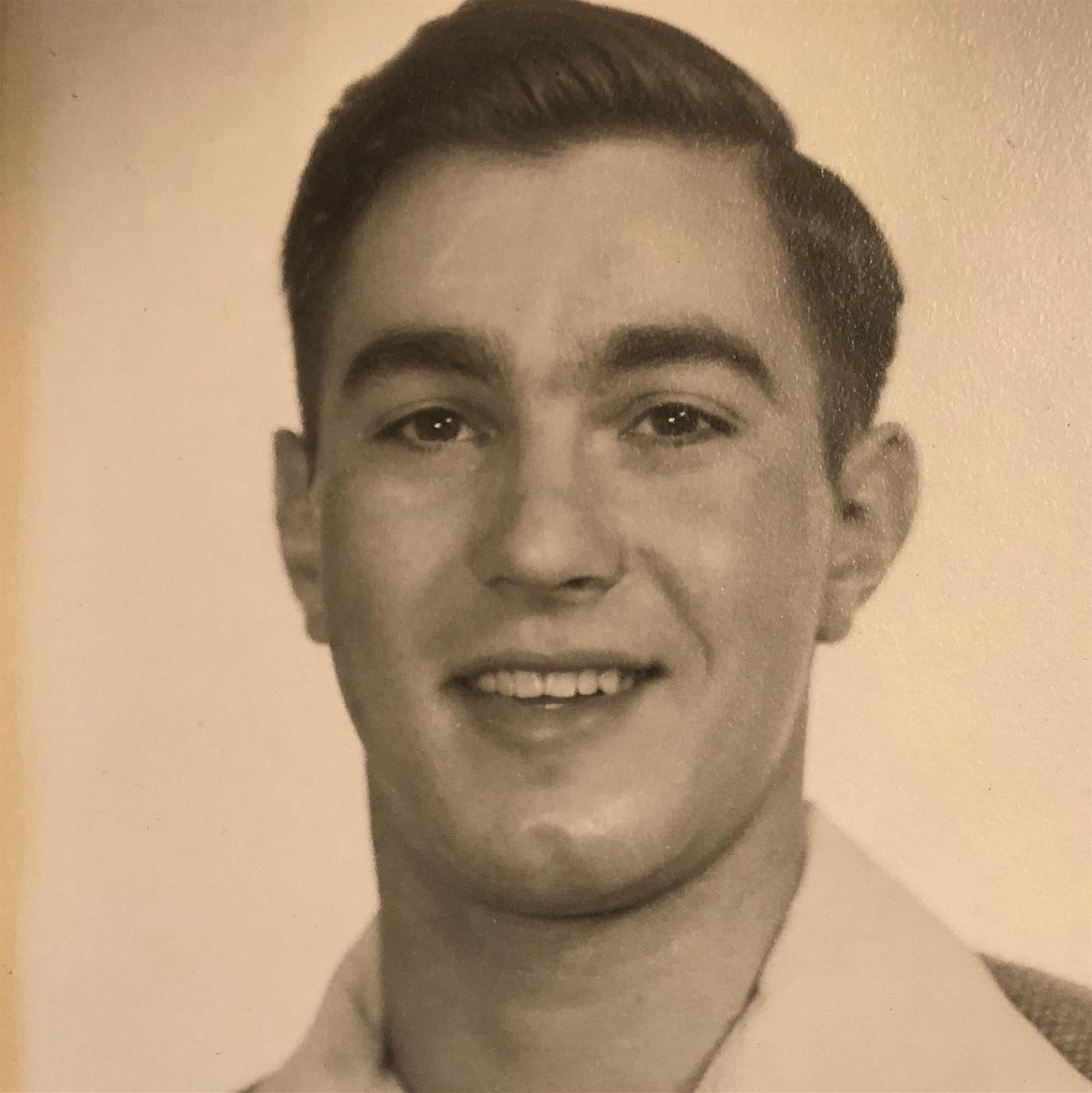
Max "Bud" owen's Obituary
Husband, Father & WWII VETERAN
Services for Max (Bud) Owen will be held Monday, February 12, 10AM. Aspen Chapel, Mt View Funeral Home. 4100 Steilacoom Blvd, SW, Lakewood, WA 98499. Repast to follow at his home.
Bud passed away, Jan 25, 2024. He was 98 years old; born, May 31, 1925, in Tukwila, Washington. The fourth child of Hazel and Herbert Clark. He was adopted by Alfred Owen in 1930 and he had three more siblings. Only his sister, Hazel, of Kodiak, AK survives.
After Tukwila, the family moved to Olalla, Granite Falls, and Kennedale where various lumber business struggled. In 1937, when Bud was ,12, the Owen boys boarded a 30’ wood boat, with a one-cylinder diesel engine, and motored to Ketchikan, Alaska where they tried to make a living producing cedar roof shakes, but the Great Depression made earning a living impossible.
In 1939 the family crossed the Gulf of Alaska to Kodiak Island aboard and Alaska Steamship. Al Owen managed the employment office and initially rented an old shack, with a dirt floor, for the family to live. When Bud turned 15, he got a job waiting tables at nearby Ft Greely.
In 1942, and only 17, he graduated from Kodiak High School. WWII was raging in Europe. The Japanese, emboldened by their success at Pearl Harbor, were intent on taking Alaska. The thousand-mile Aleutian Island chain was their intended invasion route. In response, the U.S military began preparing for war in the North Pacific, including building Army and Naval facilities on Kodiak Island, a likely target.
In June 1942, the Japanese bombed Dutch Harbor, only 500 miles west of Kodiak, and captured two of Alaska’s western-most Aleutian Islands: Kiska and Attu. It was then that the War Department realized Japan had to be stopped before it owned Alaska’s coastline, or more.
Immediately following graduation, Bud was inducted into the US Army. There was no time for basic training, but he was issued uniforms and a rifle. Soon, he and thousands of other boys boarded troop ships and were secretly enroute to Attu -- 1,400 miles west of Kodiak Island.
The seas were rough, but they eventually reached Attu and May 11, 1943, and began attacking the Japanese. The enemy had dug tunnels and caves and were prepared to fight to the end. “Those steep snow-covered mountains, and knee-deep in mud valleys, made fighting very tough.” Owen recalled.
The Japanese refused to surrender. After weeks of fighting, Owen was assigned to a squad to root out the remaining soldiers. As the youngest, and likely strongest member of the squad, Owen packed a 75-pound flamethrower up a steep mountainside. When the enemy suddenly charged out of a tunnel with rifles blazing, Owen, forgetting the extra weight on his back, dove headfirst into the nearest foxhole.
His headwounds and bleeding may have saved his life because when the Japanese overran the foxhole, they left him for dead. Later, with the Japanese defeated and bodies being collected by the Americans, Owen was found and drug unconscious down the mountain. He awoke aboard ship with his head bandaged and his broken jaw wired.
Almost a 1,000 U.S. soldiers died in the Battle for Attu. Another 3,000 were sick or wounded. Nearly 3,000 Japanese were killed or committed suicide. Only a handful surrendered.
After the Battle of Attu, Owen served in the China-India-Burma theater. In September 1945 he was deep in the jungle near China when he learned that the war was over. There were no more convoys, so he walked, rode elephants, camels, and trains hundreds of miles back to Calcutta where, he boarded a ship with 5,000 other homesick GIs.
“New York City was a beautiful site.” he remembered. "We sang God Bless America as the ship motored past the Statue of Liberty." It was the end of a grueling 30-day voyage through the sultry Indian Ocean and the unrelenting heat of the Suez Canal. He was discharged on his 21st birthday: May 31, 1945.
Like most WWII veterans, Bud never spoke about the war until eight decades later when his oldest son, also an Army veteran, asked about the dental bridge in his father’s mouth. Over several weeks, the story about his WWII experience slowly, and humbly, emerged.
Eighty years later, Bud was the last known survivor of the Battle of Attu. When interviewed recently by NHK Japanese public TV, he was asked, “How did you feel about the Japanese soldiers that you were fighting?” Giving the question careful thought, he responded, “I’ve spent 80 years trying to forget and forgive. Let’s let it be.”
Bud was married in 1948 to Virginia Olson of Seattle. Their first child was born October 1949, followed by four more over the next 10 years: Marty, JoAnn, Clifford, Neal, and Christina. Virginia passed in 1997. Bud remarried Joan Ames in 2006. She passed in 2022.
Bud was a life-long athlete. He learned to play table tennis in Kodiak and competed well into his 90s. He also played basketball and baseball. He medaled at two Senior Olympics: Washington and Utah. He won a pickleball tournament in Arizona at age 92. He managed a Table Tennis (ping pong) club in Fircrest for over 50 years.
Bud enjoyed playing cards, especially cribbage and bridge. And he loved boats and being on the water. He also enjoyed cutting and splitting firewood to heat his home in Lakewood, WA where he raised his family and lived 75 years. He was employed as an accountant for Reichhold Chemicals and retired in 1983.
He is also survived by a dozen grandchildren, their spouses, and many great grandchildren. He loved youngsters and never missed an opportunity to participate in ball games, scouting, band, academics, swimming, hiking, and much more. Square and ballroom dancing were favorite pastimes.
Bud’s family wishes to thank loving caregivers (Xzavier and Belinda) who helped him manage life during his 97/98th years. His bridge companions, especially Terry Trout and Liz McGowen, provided hundreds of hours of entertainment and mental stimulation. He played with enthusiasm the day before his death!
What’s your fondest memory of Max?
What’s a lesson you learned from Max?
Share a story where Max's kindness touched your heart.
Describe a day with Max you’ll never forget.
How did Max make you smile?